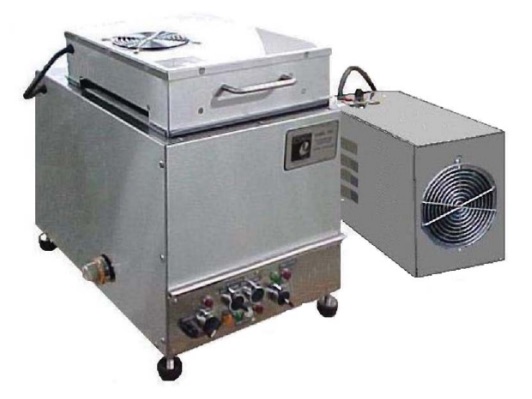
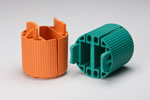
Industrial washers clean, degrease and sometimes dry mass quantities of large or small industrial parts in preparation for distribution, surface treatment or assembly. Oils, chemicals, burrs and other residue left over from the fabrication process must be removed from the surface of parts before they can undergo the surface finishing process. Coatings such as zinc and electroplating cannot be effectively applied atop grease or contaminating dirt. Read More…
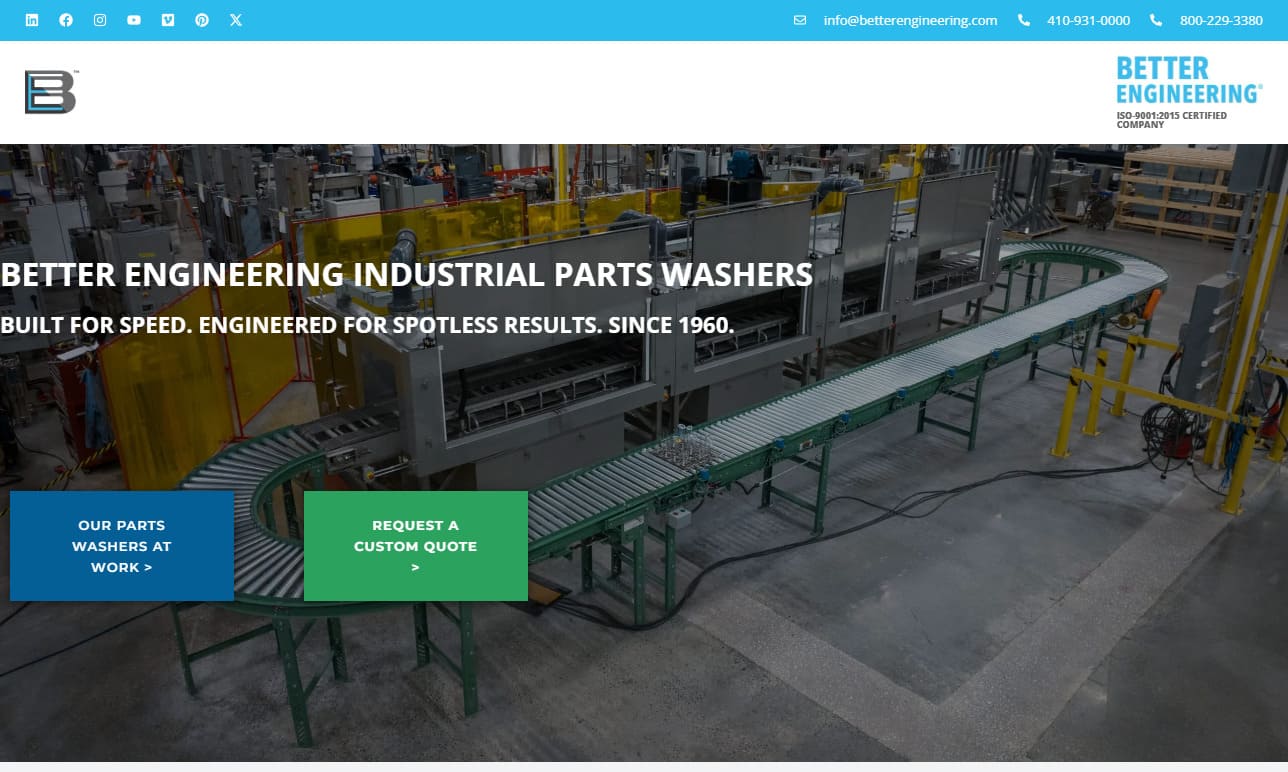
We are Better Engineering, and we specialize in designing and manufacturing high-performance parts washers and precision cleaning systems that support demanding industrial production environments. Our focus is on delivering reliable, repeatable cleaning solutions that remove oils, chips, coolants, and contaminants from metal and machined components while preserving dimensional accuracy and...
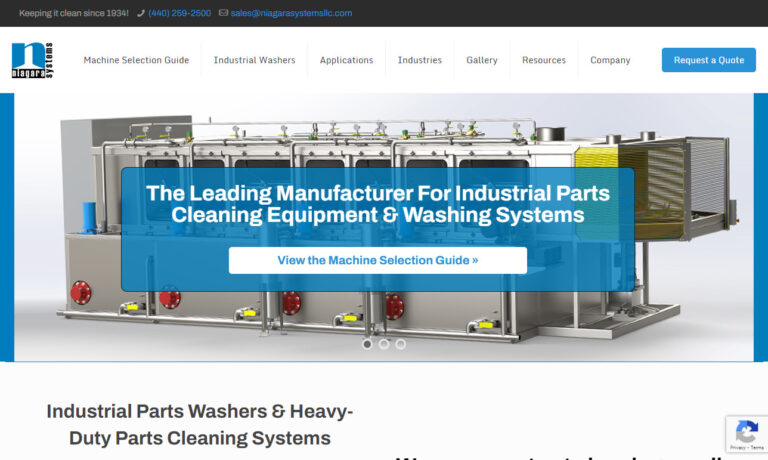
Niagara Systems LLC has offered turnkey custom parts washing systems for over 80 years. With our customization capabilities, our parts washing systems stand out from the competition.
Great Lakes Finishing Equipment, Inc. specializes in supplying parts washers for even the most demanding cleaning jobs. Equipment includes table washers, drum washers, aqueous rotary baskets, aqueous belt washing systems, & more. Let our parts washing specialists assist you with your specific washing applications. Contact us today for all of your parts washer needs.
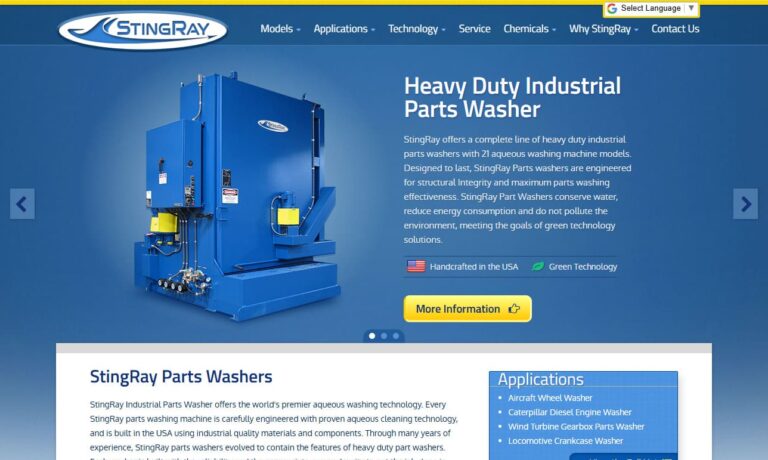
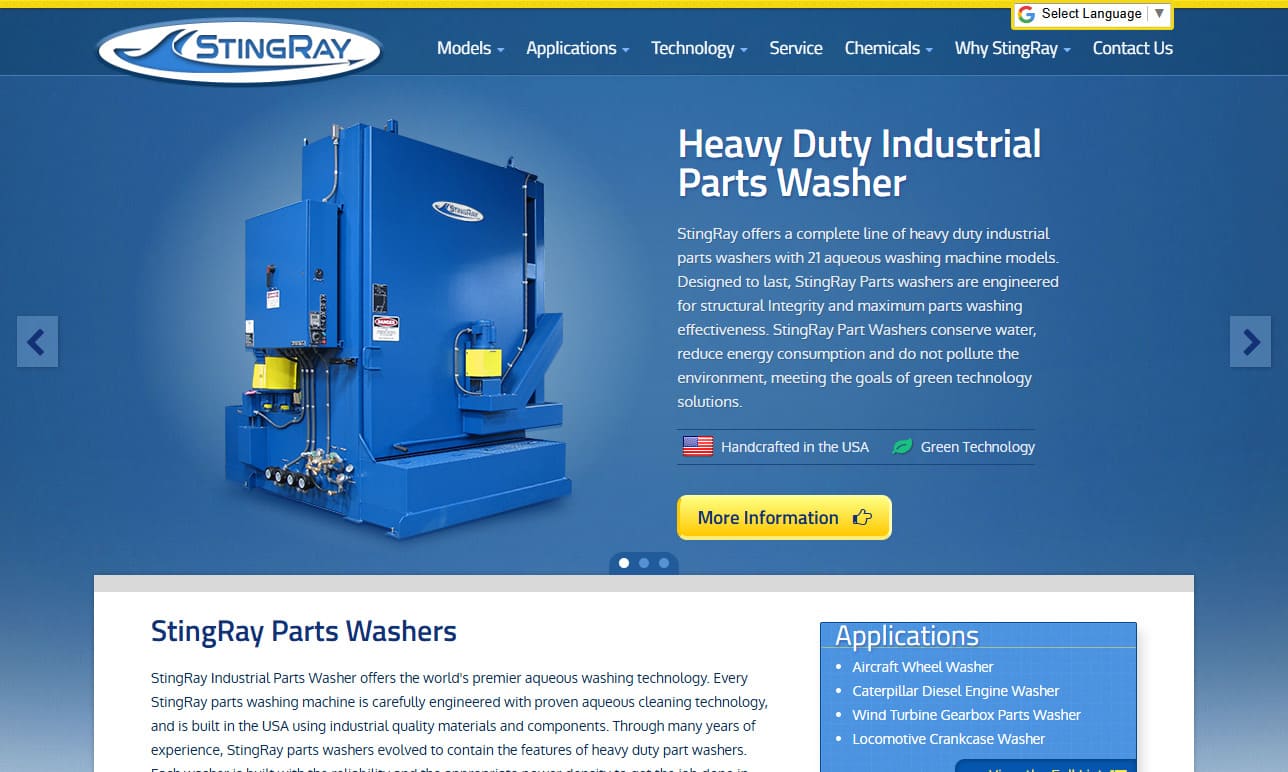
Need help with a parts washer to clean your dirty parts? Contact StingRay to get a quote for an engineered parts washer. StingRay Parts Washer offers a complete solution to your cleaning needs which includes fixturing of your parts, industry approved detergent, engineered parts washer, and the most complete customer service in the industry.



More Industrial Washer Manufacturers
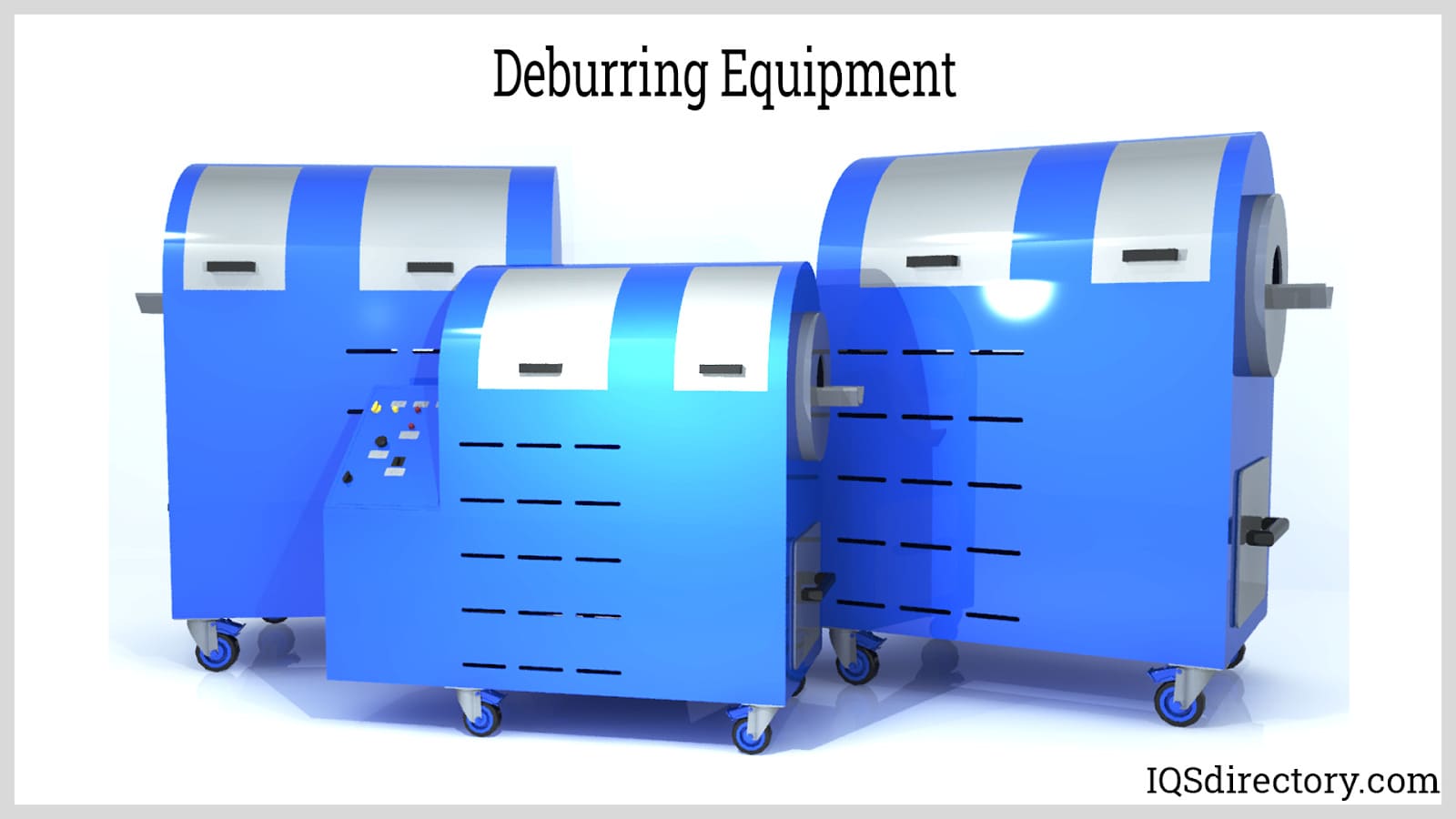
Industrial washers may be designed as multi-stage processes, cleaning, deburring, drying, surface treating and even powder coating all in one application. Other parts washing machinery may be as simple as a single-stage immersion aqueous parts washing tub. Industrial washers use water, aqueous chemical solutions, ultrasonic blasts and agitation to achieve clean part surfaces; sometimes non-aqueous methods such as vapor cleaning, acoustic cleaning, laser ablation and vibration cleaning are used. Most industrial washers use aqueous parts washing to remove contaminating surface oils, although non-aqueous methods are sometimes used where aqueous cleaning is not possible.
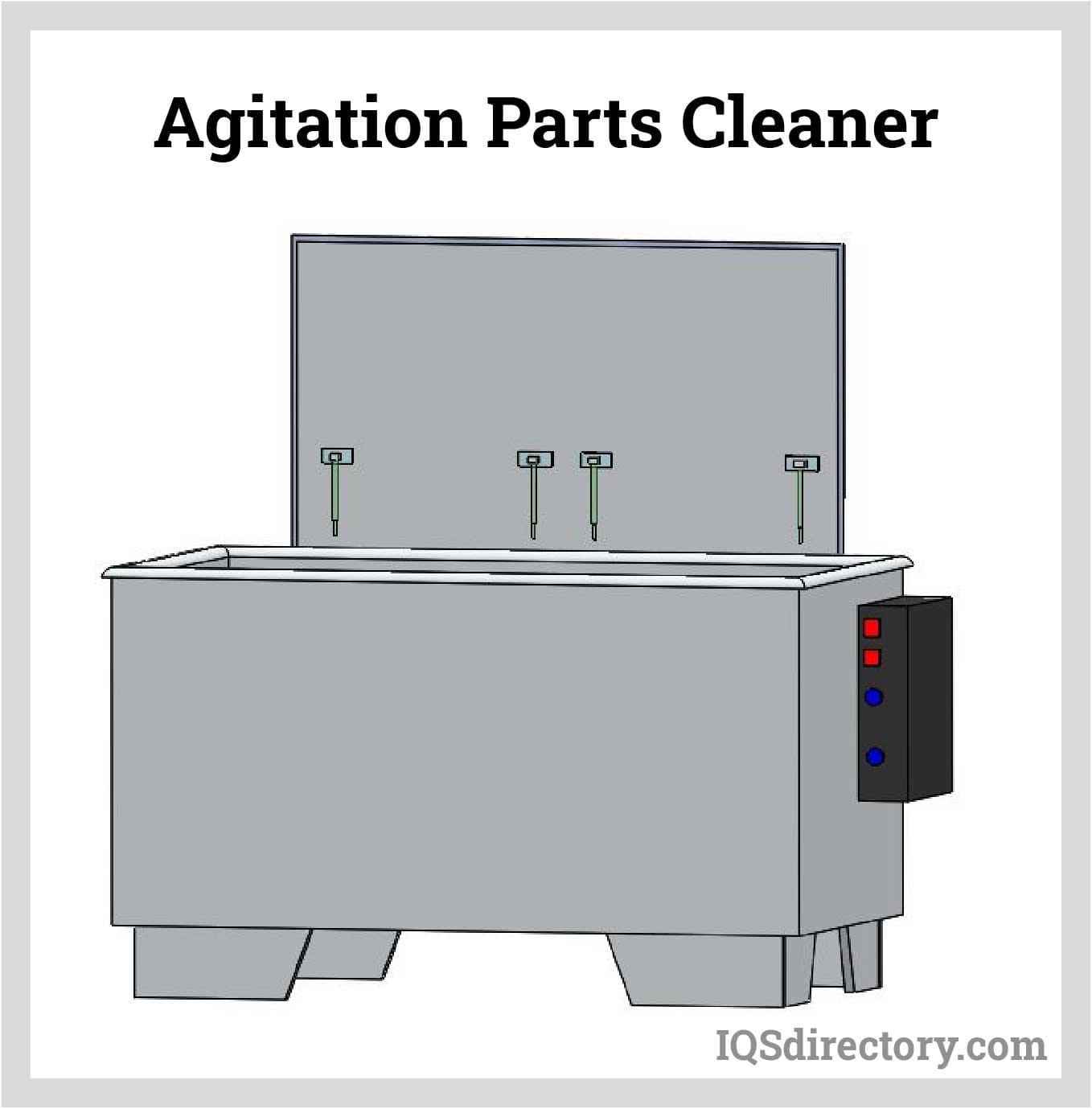
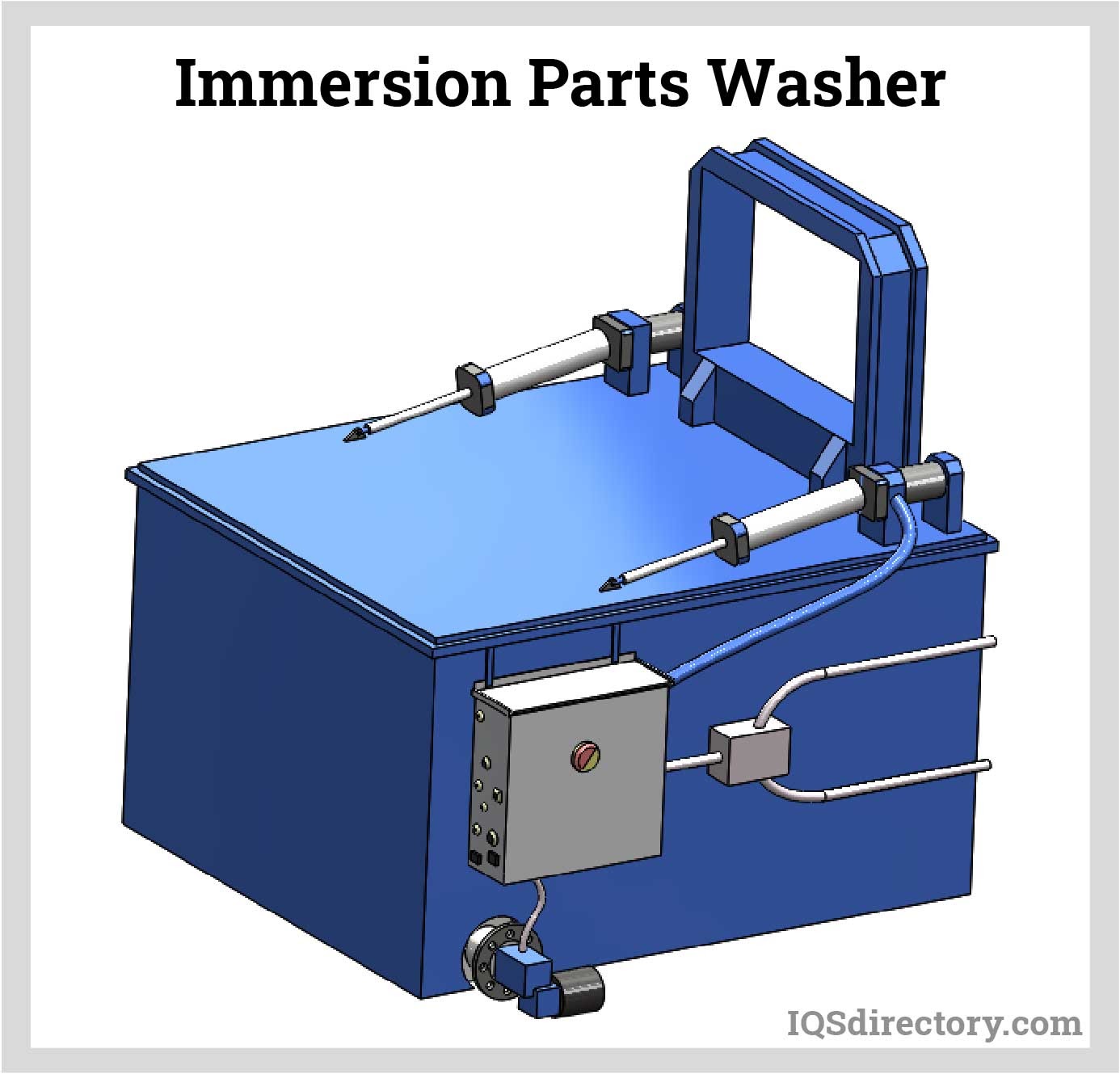
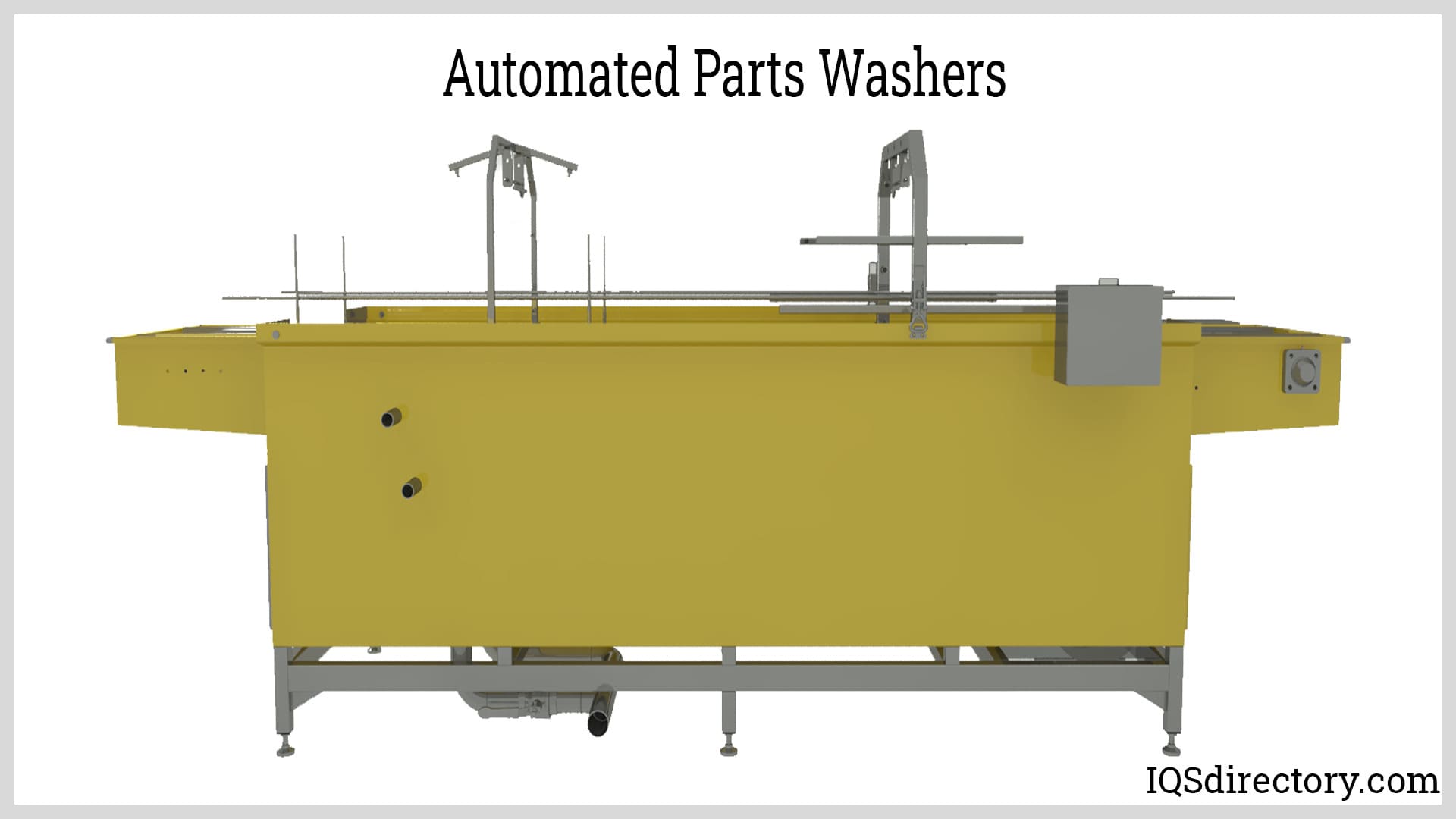
The two main methods aqueous industrial washers use are immersion washing and spray washing. Immersion washing, also called agitation, immerses unfinished parts in a hot organic or chemical water-based solvent in a wire mesh basket that rotates, turns, shakes and generally agitates dirt off of the parts. Immersion washers may be as simple as a tub in which parts are manually placed or removed, or they may be a series of tubs with different washing, rinsing and treating solvents and automated arms that move baskets between them.
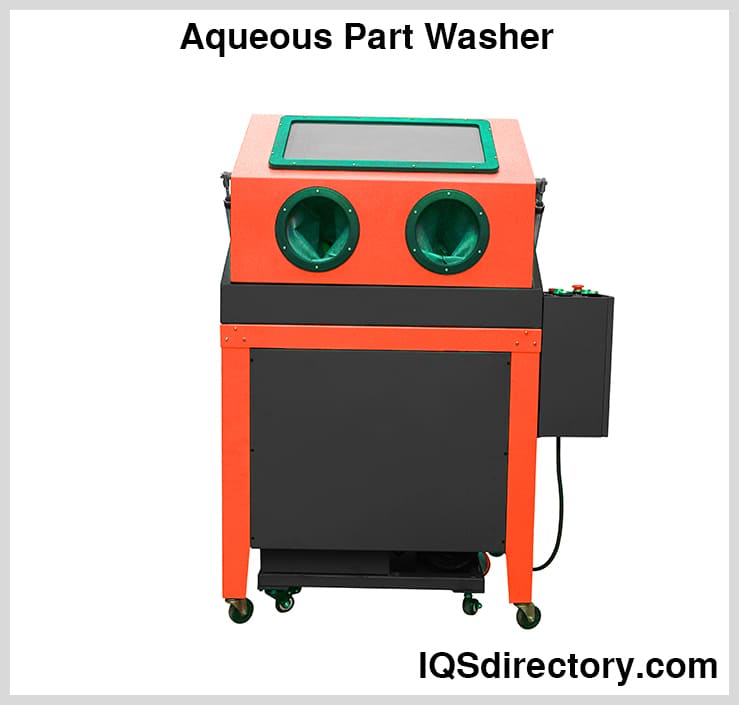
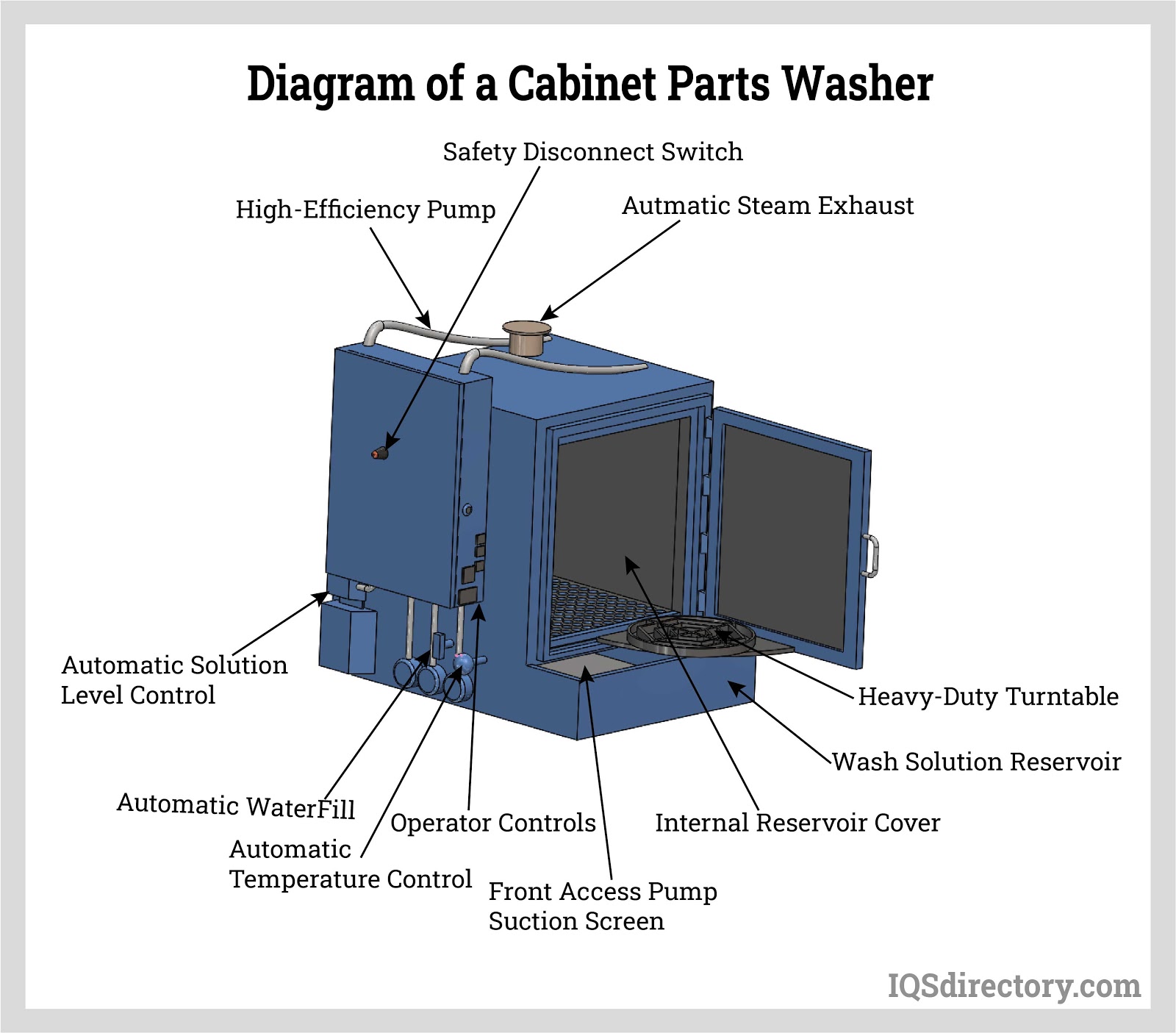
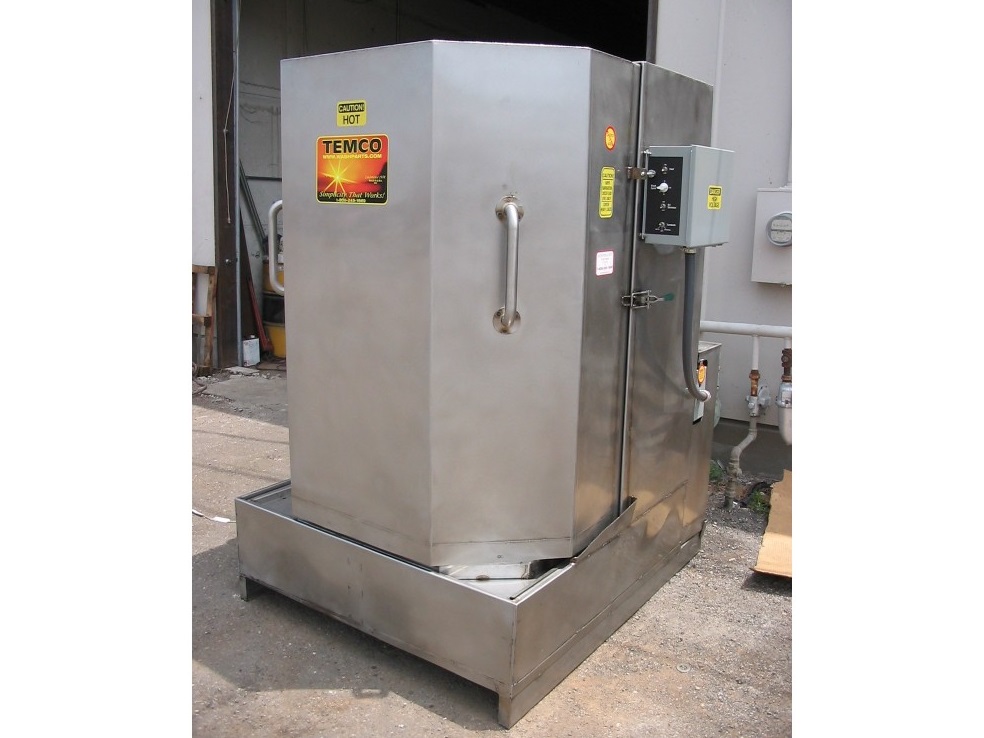
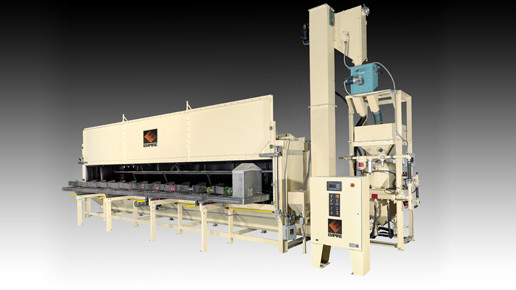
Spray washers spray water and water-based cleaning solutions onto parts at high velocities to remove dirt; there are many different types of spray washers for different types of part washing. Cabinet washers, cell washers, conveyor belt washers, monorail/overhead systems, rotary tumblers and pallet/dunnage washers all utilize spray washing techniques.
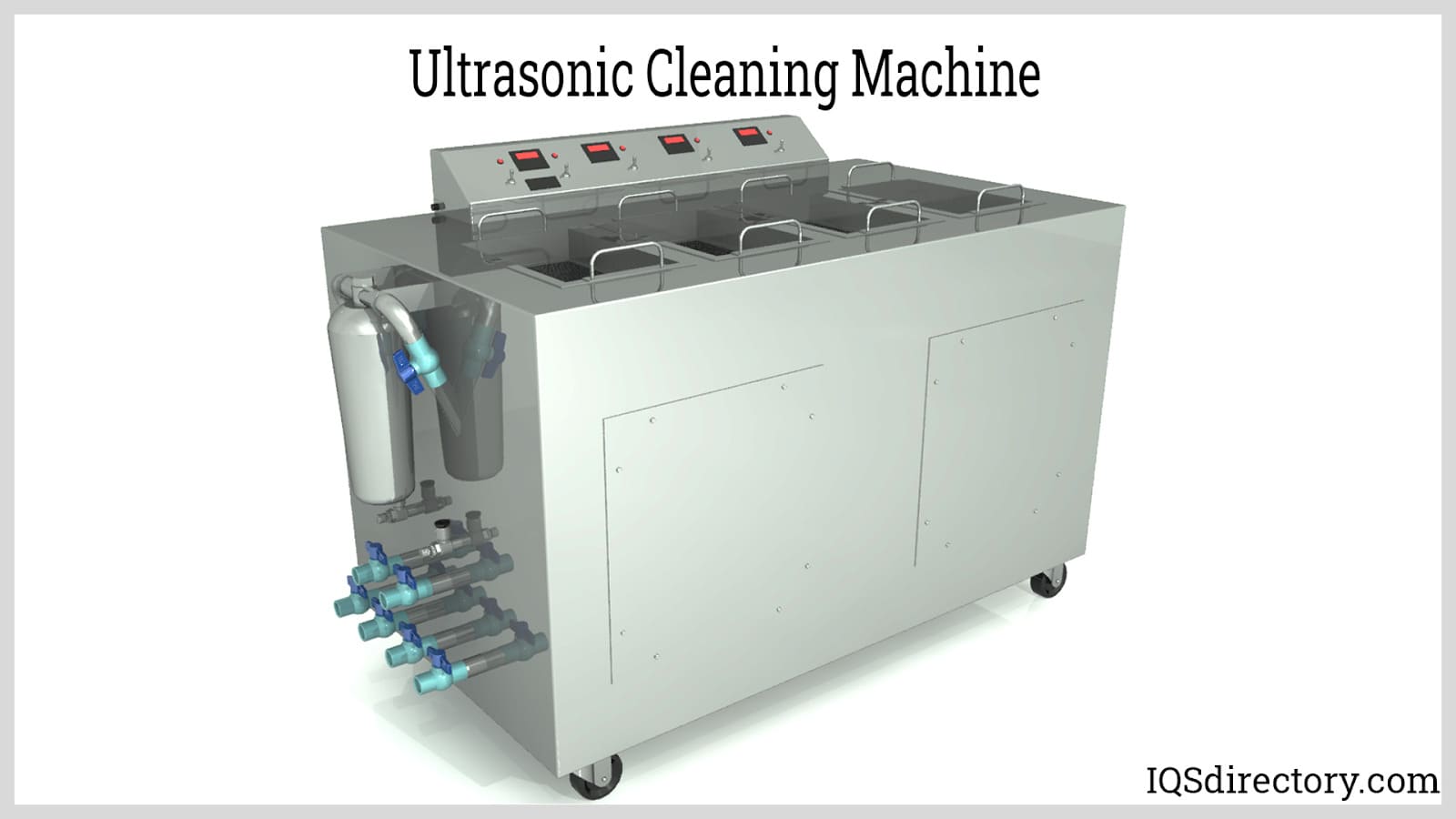
Most aqueous parts washing solvents have until very recently been chemical-based, but recent rises in environmental and worker safety concerns and regulations have made the use of organic solvents much more common. Ultrasonic cleaning is a new, innovative type of precision cleaning that requires far smaller solvent concentrations than traditional washing, cutting down on harmful and expensive waste.
Tiny air blasts burst against parts' surfaces, cleaning effectively in crevices other washing techniques can't reach. Automotive industrial washers often use ultrasonic cleaning to reduce the risk of hazardous malfunction due to part contamination. The same is true for medical, surgical, dental and electronics parts washing.
In an industry that depends upon exactness and precision, parts contaminated with foreign chemicals, oil, grease or shavings can mean the difference between smoothly operating machinery and loss of thousands of dollars or even lives. Industrial washers provide an essential function in industrial manufacturing, not only by providing thorough cleaning solutions but also by reducing labor costs. With the multitude of part sizes, shapes and cleaning requirements, industrial washer manufacturers often provide custom solutions, designing and fabricating equipment or equipment systems tailored to a company's unique parts washing requirements.